
The manufacturing sector has always been defined by its ability to adapt. From the first industrial revolution to the rise of automation in the late 20th century, factories have continually evolved to meet the demands of efficiency, productivity, and quality. Today, the industry is once again undergoing a seismic shift, this time powered by artificial intelligence. The adoption of AI for manufacturing is not just a passing trend – it is redefining how products are designed, made, and delivered across the globe.
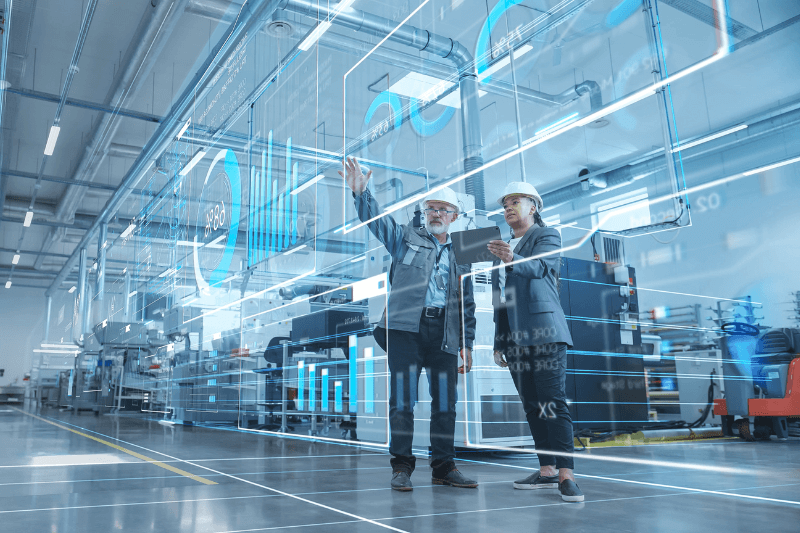
Why Manufacturing Needs a Smarter Approach
Manufacturing businesses face a unique set of pressures. Supply chain disruptions, rising material costs, shifting customer expectations, and the constant demand for faster lead times are all part of today’s landscape. Traditional automation has solved many of these challenges by reducing labour costs and increasing speed. However, the complexity of modern production requires something more adaptive.
This is where artificial intelligence excels. AI does not simply automate a process; it learns, optimises, and predicts outcomes based on the data it collects. For manufacturers, that means smarter operations, reduced waste, and the ability to anticipate issues before they escalate into costly problems.
Transforming Quality Control
One of the clearest examples of AI’s impact in manufacturing is in quality control. Traditionally, inspections were performed manually or through mechanical processes. This left room for human error and created bottlenecks in production. AI-driven systems can now analyse products in real time using computer vision and machine learning algorithms, identifying even the smallest defects with far greater accuracy than the human eye.
This not only improves product quality but also reduces waste, ensuring defective items are flagged before they leave the production line. Manufacturers can respond instantly, making adjustments to processes and maintaining consistently high standards.
Predictive Maintenance and Reduced Downtime
Machine downtime is one of the most expensive issues for manufacturers. A single fault can halt production for hours, leading to delays and financial losses. With AI-enabled predictive maintenance, sensors collect data from equipment and use algorithms to forecast when a part is likely to fail.
Instead of waiting for a breakdown, manufacturers can carry out maintenance at the optimal time, minimising disruption. This proactive approach extends the lifespan of machinery, reduces repair costs, and ensures smoother production schedules.
Supply Chain Optimisation
The pandemic highlighted just how fragile global supply chains can be. AI provides a way for manufacturers to gain greater visibility and control over their logistics. By analysing data across suppliers, transport networks, and market trends, AI tools can forecast potential bottlenecks and suggest alternative strategies.
For example, AI systems can recommend ordering materials earlier to offset expected shortages or reroute deliveries when delays are likely. This allows manufacturers to be more resilient and agile, keeping production running smoothly even in times of uncertainty.
Energy Efficiency and Sustainability
Sustainability has become a top priority for both consumers and regulators. Manufacturing is often criticised for its environmental impact, but AI offers solutions to significantly reduce waste and energy consumption.
By monitoring energy usage across facilities, AI can identify inefficiencies and propose ways to reduce power consumption. Smart systems can automatically adjust heating, cooling, and machinery schedules to minimise energy waste. This not only lowers costs but also helps manufacturers meet sustainability targets and appeal to increasingly eco-conscious customers.
Enhancing Product Design and Innovation
Manufacturing is no longer just about producing items efficiently; it is also about creating products that meet changing customer demands. AI-powered design tools can analyse vast amounts of data from customer feedback, market trends, and product usage to generate innovative designs.
Generative design software, for instance, uses AI to explore countless iterations of a product, testing different materials, shapes, and configurations to optimise for strength, cost, and sustainability. This allows companies to bring new products to market faster while ensuring they meet both performance and customer expectations.
Empowering the Workforce
Some fear that AI will replace human workers in manufacturing, but the reality is far more nuanced. AI is most effective when it works alongside people, handling repetitive or data-heavy tasks and freeing employees to focus on more complex problem-solving and creative roles.
For instance, AI systems can provide real-time insights to operators, helping them make better decisions and respond quickly to issues. Training programmes supported by AI-driven simulations also make it easier for staff to learn new skills and adapt to the evolving demands of the factory floor.
Overcoming Barriers to Adoption
Despite its benefits, implementing AI in manufacturing is not without challenges. Many businesses struggle with legacy systems, data silos, or uncertainty about where to begin. Integrating AI requires investment in infrastructure, staff training, and a clear strategy for aligning technology with business goals.
There are also cultural barriers to overcome. Employees may resist change if they see AI as a threat to their jobs rather than a tool that enhances their work. Successful adoption requires not only technological investment but also a strong focus on communication and change management.
Case Studies of AI in Action
- Automotive Manufacturing: Major car manufacturers now use AI to monitor assembly lines in real time. Machine vision systems catch imperfections in welding and painting, reducing recalls and warranty costs.
- Food and Beverage: AI is being used to ensure consistency in packaging and product quality. Predictive analytics help to forecast demand, reducing waste and improving shelf availability.
- Pharmaceuticals: AI optimises the production of drugs, ensuring precision in dosage and speeding up research and development cycles. This has become particularly important in delivering vaccines and treatments at scale.
These examples demonstrate that AI is not a distant vision but a present-day reality across industries.
What the Future Holds
The next decade will likely see the rise of fully connected smart factories, where AI systems integrate with the Internet of Things (IoT), robotics, and cloud computing. These factories will be capable of self-monitoring, self-adjusting, and even self-repairing, delivering unparalleled efficiency and agility.
Manufacturers who invest early in AI will gain a competitive advantage, positioning themselves ahead of rivals still reliant on outdated systems. Customers will increasingly expect faster delivery, higher quality, and sustainable practices – all of which AI can help deliver.
Conclusion
Artificial intelligence is no longer a futuristic concept for manufacturing – it is here and shaping the industry today. From predictive maintenance and supply chain optimisation to quality control and product innovation, the benefits are vast and undeniable.
For manufacturers looking to stay competitive in a rapidly changing landscape, embracing AI is no longer optional; it is essential. Partnering with experts can make this journey smoother, ensuring the right technologies are deployed in the right way.
If your organisation is ready to take the next step towards smarter, more efficient, and more sustainable manufacturing, BCN can provide the expertise and support to help you succeed.