Blog

Why Graphics are the Backbone of Modern Web Design

In the early days of the internet, websites were little more than digital brochures—walls of black text against gray backgrounds with the occasional blue hyperlink. Today, the digital landscape has transformed into a high-definition, immersive experience. As our collective attention spans continue to shrink, the burden of communication has shifted from the written word to the visual element. In modern web design, graphics are no longer just “decorations”; they are essential tools for communication, branding, and user psychological engagement.

Understanding the importance of graphics is critical for any business or creator looking to establish a meaningful presence online. This article explores how visual elements dictate user behavior, enhance brand identity, and ultimately drive the success of a digital platform.


The First Impression: The Sub-Second Judgment

Research suggests that it takes a user about 50 milliseconds (0.05 seconds) to form an opinion about a website that determines whether they will … Read more

Blog

Keeping Industrial Operations Safe in a Connected World

The way industries operate has changed dramatically in recent decades. What were once isolated machines and systems are now increasingly connected, allowing companies to benefit from real-time insights, improved efficiency, and faster decision-making. While these advances bring clear advantages, they also introduce new challenges. Keeping the technology that runs factories, utilities, and infrastructure safe from disruption is now a priority that organisations cannot ignore.

A different kind of challenge

When people think of digital security, they often imagine protecting emails, financial records, or customer data. In industrial settings, however, the stakes are different. Systems are not just storing information, they are controlling physical processes such as power generation, transport networks, and automated production lines. If those systems are interfered with, the consequences go far beyond a data breach. The potential for downtime, damaged equipment, or risks to safety means the approach must be tailored to the environment.

The complexity of

Read more
Blog

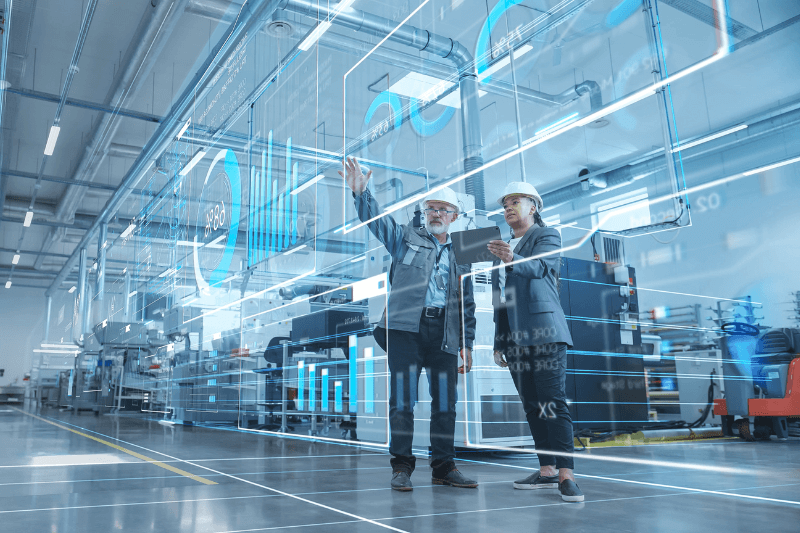
From Production Lines to Smart Factories: The Future of Industry

The manufacturing sector has always been defined by its ability to adapt. From the first industrial revolution to the rise of automation in the late 20th century, factories have continually evolved to meet the demands of efficiency, productivity, and quality. Today, the industry is once again undergoing a seismic shift, this time powered by artificial intelligence. The adoption of AI for manufacturing is not just a passing trend – it is redefining how products are designed, made, and delivered across the globe.

Why Manufacturing Needs a Smarter Approach

Manufacturing businesses face a unique set of pressures. Supply chain disruptions, rising material costs, shifting customer expectations, and the constant demand for faster lead times are all part of today’s landscape. Traditional automation has solved many of these challenges by reducing labour costs and increasing speed. However, the complexity of modern production requires something more adaptive.

This is where artificial intelligence excels. … Read more