
In our modern discourse, “technology” is often synonymous with sleek smartphones, ethereal cloud computing, and minimalist home offices. However, there is an entire dimension of innovation that exists far away from air-conditioned cubicles. This is the world of Hard Job Technology. It refers to the rugged, high-stakes engineering designed for environments where the stakes are life and death, and where the physical conditions are brutal enough to destroy standard electronics in seconds.
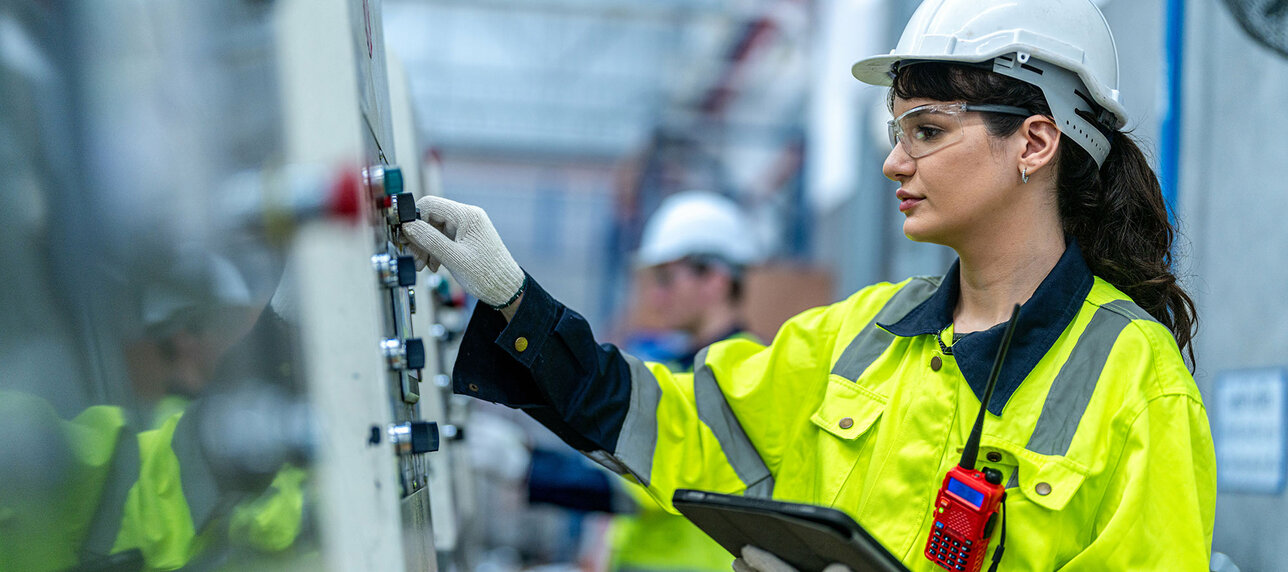
From the crushing depths of the midnight zone in the ocean to the searing heat of active volcanic monitoring and the high-voltage corridors of our energy grids, hard job technology is the silent backbone of modern civilization. As we move through 2026, these technologies are evolving at a breakneck pace, blending extreme durability with advanced intelligence to make the “impossible” jobs of yesterday the “routine” tasks of tomorrow.
Engineering for Extremes: The Philosophy of Ruggedization
The primary differentiator of hard job technology is the philosophy of ruggedization. In consumer electronics, the focus is on aesthetics and portability. In hard job tech, the focus is on “Mean Time Between Failures” (MTBF) under duress.
A computer used by a deep-sea welder or an oil rig technician isn’t just “sturdy”; it is often encased in MIL-SPEC (military specification) housing that can withstand extreme vibrations, corrosive saltwater, and temperatures ranging from -40°C to 80°C. This involves specialized thermal management systems that don’t rely on traditional fans—which would clog with dust or fail in vacuums—but instead use advanced phase-change materials to dissipate heat. These devices are the tanks of the digital world, built to be dropped, submerged, and neglected, yet still perform mission-critical calculations.
Robotics in High-Hazard Environments
One of the most significant leaps in hard job technology is the deployment of specialized robotics in environments too dangerous for human lungs or limbs. This is particularly evident in the field of nuclear decommissioning and disaster response.
Modern robotic platforms are now equipped with radiation-hardened circuitry. Standard silicon chips fail quickly under intense radiation because high-energy particles flip bits in the memory, leading to “blue screens” or total hardware failure. Hard job engineers use specialized “rad-hard” components and redundant systems to ensure that a robot can enter a damaged reactor core to perform structural repairs or mapping.
Similarly, in the mining industry, autonomous heavy machinery is transforming the “hard job” of underground excavation. These massive machines use LiDAR and ultrasonic sensors that are specially tuned to see through thick dust and smoke, allowing for 24/7 operation in deep-earth environments where oxygen levels are low and the risk of collapse is high.
Wearable Tech for the Physical Workforce
While we often think of wearables as fitness trackers, in the world of hard jobs, they are vital safety equipment. In 2026, the “connected worker” is a reality on construction sites and in heavy manufacturing plants.
Exoskeletons are a prime example of hard job tech that bridges the gap between human intuition and machine strength. Passive exoskeletons use spring-loaded systems to redistribute the weight of heavy tools, reducing the strain on a worker’s lower back and shoulders. Active, powered versions allow workers to lift heavy components with precision, effectively turning a single human into a high-capacity forklift.
Furthermore, smart helmets and augmented reality (AR) visors are being used by technicians working on high-voltage power lines. These visors can overlay digital schematics onto physical transformers, highlighting live wires in red to prevent accidental contact. This “X-ray vision” significantly reduces the margin for error in professions where a single mistake is fatal.
The Connectivity Challenge: Edge Computing in the Wild
Hard jobs often take place at the “Edge”—locations far removed from reliable high-speed internet or stable power grids. Whether it is an offshore wind farm in the North Sea or a remote research station in Antarctica, connectivity is a major technical hurdle.
Hard job technology solves this through the use of Edge Computing. Instead of sending data back to a central server for processing, the hardware on-site is powerful enough to perform real-time analytics. This is crucial for “predictive maintenance.” A sensor on a remote pipeline can detect a subtle change in vibration and determine, locally, if a valve is about to fail. It can then trigger an emergency shutdown instantly, rather than waiting for a round-trip signal to a cloud server thousands of miles away.
The Human Impact and the Future of Labor
There is a common fear that technology will replace the “hard worker.” However, the trajectory of hard job technology suggests a different outcome: it is making these jobs more sustainable. By taking over the most dangerous, repetitive, and physically punishing aspects of the work, technology allows the human operator to move into a role of “technical overseer” or “remote pilot.”
This shift is crucial for an aging global workforce. By reducing the physical toll on the body, hard job tech allows experienced veterans to stay in the industry longer, sharing their invaluable institutional knowledge while the machines do the heavy lifting.
Conclusion
Hard job technology is a testament to human ingenuity in the face of nature’s most unforgiving elements. It is the bridge between our ambitions and the physical limitations of our bodies and our standard tools. As we continue to push the boundaries of where we can work—be it deeper in the ocean, further into space, or more efficiently in our own heavy industries—the development of rugged, intelligent, and resilient technology will remain our most important endeavor.
In the end, the most impressive thing about hard job technology isn’t just its ability to survive a thousand-foot drop or a thousand-degree furnace; it is its ability to protect the people who do the world’s most difficult work. It is innovation with a purpose, engineered for the iron, the grit, and the extraordinary challenges of the real world.